


You’re in the “I know I need a website… but I’m not ready to pull the trigger yet” phase.
If you’re a therapist in private practice (or you’re about to be), that makes sense.
A new website is a real investment. And if you’ve ever hired help for your business (branding, photos, bookkeeping, supervision, marketing) you already know the feeling: most investments pay off, and a few teach you an expensive lesson.
This post is here to help you avoid the expensive lesson.
Because a therapist website is different from a generic small business site. You’re not selling candles. You’re asking people to trust you with their nervous system.
So before you sign anything with a designer, here’s a simple gut-check that’s specific to therapists, psychologists, counselors, LMFTs, LCSWs, LPCs, and group practice owners.
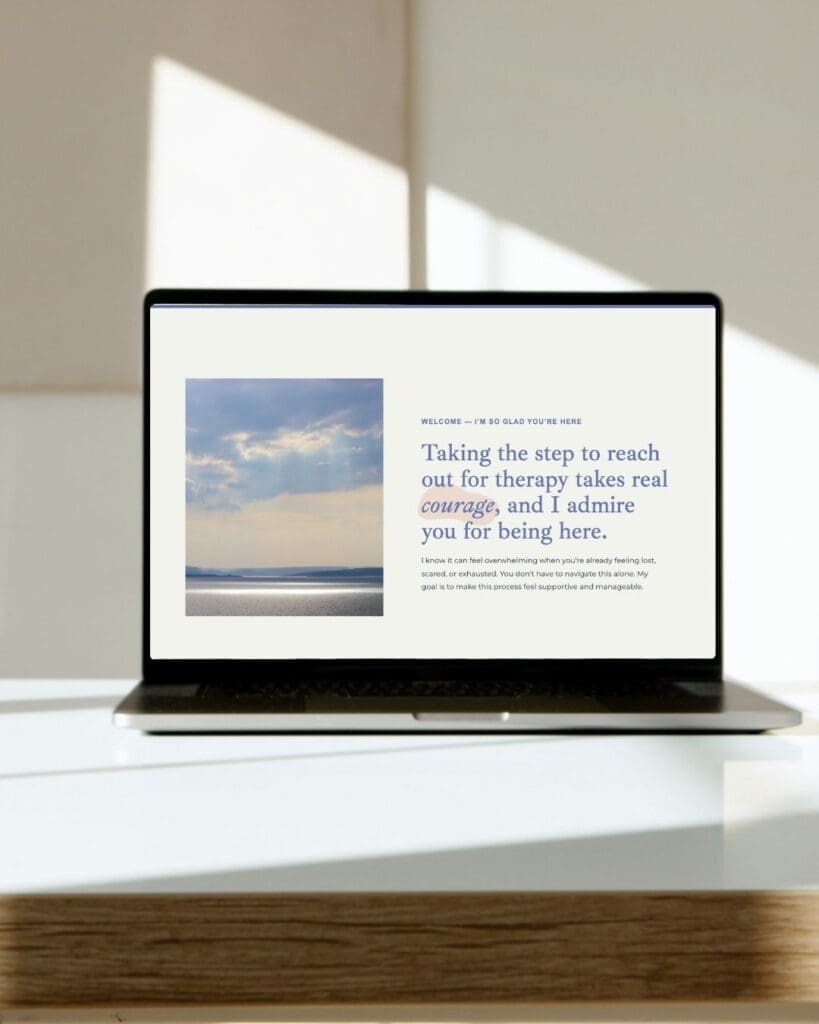
A therapist-specific gut-check before hiring a web designer
1) There’s a real contract (not “let’s just get started”)
You want scope, timeline, payment schedule, revisions, and what happens if things stall. A contract protects both of you and prevents the weird, messy stuff later.
If someone can’t provide a contract, that’s a risk.
2) They have a clear process and they lead it
You should be able to understand what happens first, what you’re responsible for, when you’ll review things, and what “launch” actually includes.
If the process feels vague, you’ll end up being the project manager. And you already have enough emotional labor in your life.
3) You genuinely love their style and it fits your practice
Not “pretty.” Not “clean.” I mean: could you see your future site looking like their portfolio?
Therapy websites especially need the right tone. Warm without being overly soft. Professional without being corporate. Clear without being clinical.
If you’re trying to convince yourself you’ll like it once it’s yours, pause.
4) They understand therapy website structure (this matters more than people think)
A therapist website isn’t just “Home, About, Services, Contact.”
A good designer should already be thinking about:
- Your specialties and what clients are actually searching for
- What to say (and not say) to stay ethical and accurate
- How you’ll guide someone from “I’m overwhelmed” to “I can take one step”
You shouldn’t have to teach a designer how therapy inquiries work.
5) The scope is painfully clear
You should know exactly what you’re getting.
How many pages? Which pages? Branding included? SEO basics? Blog setup? Email sign-up integration? Booking integration?
Therapists get burned here a lot because “a few little changes” turns into a whole second project.
6) Responsibilities are defined (so you don’t spiral mid-project)
You provide: copy, intake details, your policies, licensing info, photos.
They provide: structure, design, layout, implementation, mobile optimization.
If a designer expects you to “just send whatever,” you’ll get stuck. You want someone who tells you exactly what to gather and when.
7) They can talk about trust, boundaries, and clarity (not just aesthetics)
Your website is often your first session with a client.
It should quietly communicate:
- Here’s what I help with
- Here’s what working with me looks like
- Here’s how to start
- Here are the boundaries (insurance, hours, availability, crisis resources if relevant)
If your designer only talks about fonts and “vibes,” you may end up with a beautiful site that doesn’t help clients take action.
8) You’ll own your website and you’ll know what happens after launch
You should have full access, logins, and clarity on what support looks like post-launch.
No disappearing. No hostage situation. No “text me if something breaks” with no actual plan.
9) The investment feels aligned for your season of practice
A little nervous is normal. But underneath it, you should feel steady.
If you feel pressured, rushed, or like you’re signing because you’re afraid to miss the “deal,” pause.
It’s okay to wait until you’re closer to launching, licensed, or clearer on your offer. A simple landing page can be a smart stepping stone while you build.
10) Your nervous system feels safe
After you talk to a designer, check in with your body:
Did I feel supported or sold to?
Did I feel clarity or confusion?
Did I feel calmer… or more anxious?
This matters. Especially for therapists.
If you’re not ready yet, here’s what is worth doing now
If a full website isn’t your move yet, you can still make progress without forcing it:
- pick a business name and secure the domain
- clarify your core offer (what you’re actually offering in the next 3 months)
- decide: in-person, telehealth, or both
- gather a short list of services/specialties you want to lead with
That’s often the difference between “someday” and “okay, I’m actually building this.”
If a new website is on your 2026 list, you don’t need to be 100% ready. You just need to be honest about what season you’re in.
And if you’re curious, you can always inquire with a designer for a reality check: what you need now, what can wait, and what the most cost-effective option would be for your stage.
No pressure. No rushing. Just clarity.


